

In layman’s language, simply making sure goods and services move smoothly from point A to point B, while taking care of every step in the process.
Supply Chain Management depicts the life process of a product which starts from as basic as a raw material to the finished product. It is a process of managing the flow of goods and services from the point of curation to the point of consumption.
Supply chain leaders who transformed the way the world moves goods and creates value.
Krishan K. Batra
Served as the president and CEO of ISM (Institute for Supply Management). He is a renowned person in the field of supply chain management. He founded the global UNSPSC coding system, led major ERP and procurement reforms for the UN, and has advanced supply chain professionalization in India through certifications, training, and digital transformation initiatives.
N. Viswanadham
N.Viswanadham is a leading scholar in supply chain management known for starting with the concept of ecosystem-based supply chains. His work integrates governance, risk, innovation, and performance to design resilient and efficient global supply networks.
Sunil Chopra
Sunil Chopra, IBM Distinguished Professor at Kellogg School of Management, is a leading authority in supply chain management. He co-authored the landmark textbook Supply Chain Management: Strategy, Planning, and Operation, introducing core frameworks like strategic fit and performance drivers. His research on supply chain strategy, network design, and risk management has shaped global SCM practices and influenced how organizations build efficient and resilient supply networks.

Its primary goal is to improve efficiency, reduce costs, and enhance customer satisfaction by ensuring that the right products are available at the right place and time. The career field surely consists of three words but has its roots spread in every industry as the industries go hand in hand with it.
SCM is a field containing crucial components like planning, sourcing, manufacturing, logistics, and returns. These components are to be studied well in order to understand how businesses operate efficiently and deliver value to customers.
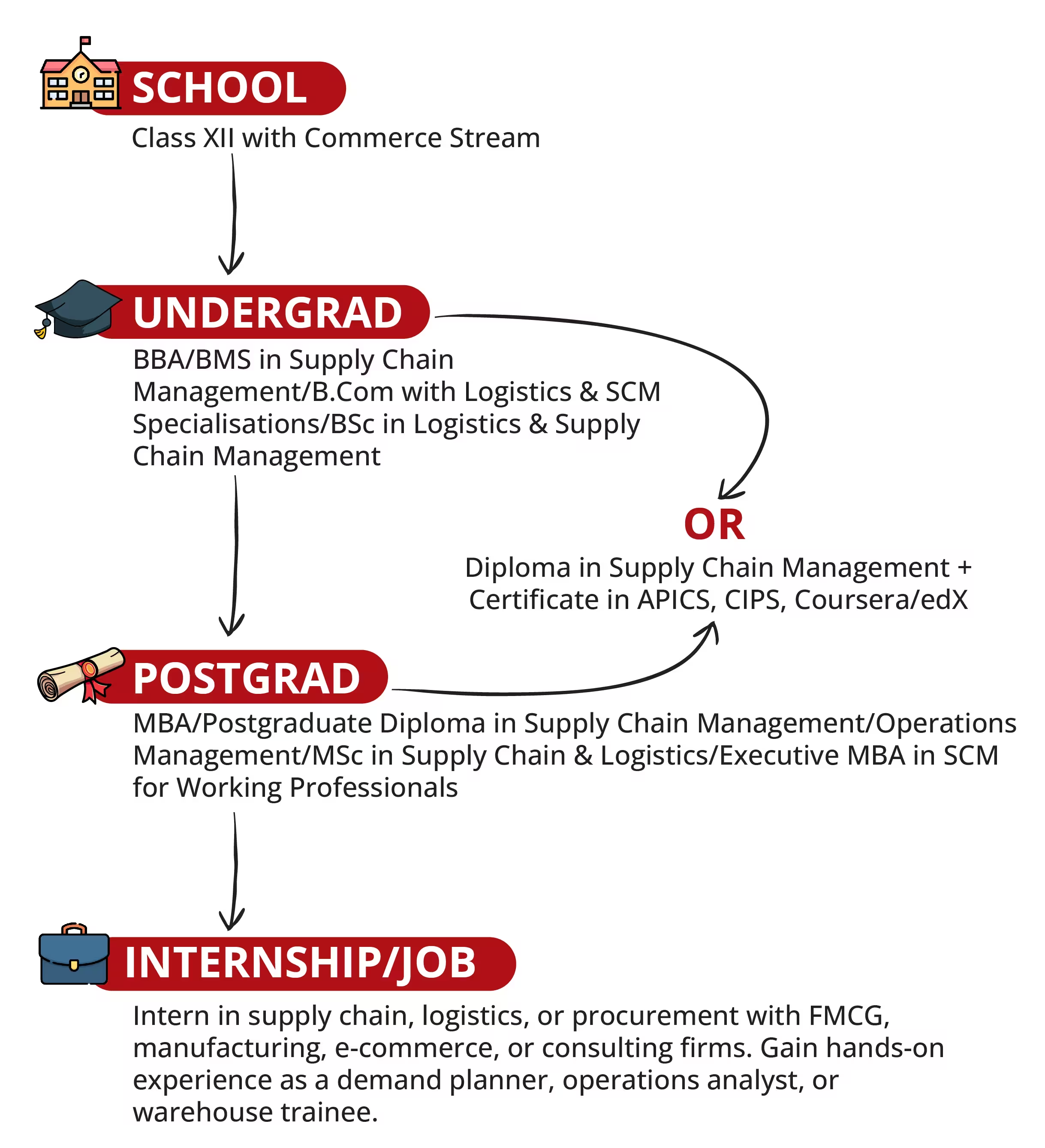
SCM is an important part of any industry and holds high value. Over the years, it has evolved as a flourishing career opportunity and many top colleges now offer specialized related courses to equip students with the skills needed for this dynamic field.
Supply Chain Management is an extensive domain having itself spread in multiple areas. Areas which can be catered to through SCM are listed below.
Early grasping of the SCM concept makes one connect to the chain of management earlier, enabling better insight into procurement, logistics, and operations, and paving the way for faster career growth in this dynamic field.
Supply Chain Management keeps businesses moving, connecting products, people, and processes. It offers vast career opportunities for those who love strategy, problem-solving, and efficiency.

Q. Is supply chain management an 'in demand' career option?
Ans. Yes, SCM is highly in demand due to the global rise in e-commerce, manufacturing, and logistics.
Q. What is the difference between logistics management and supply chain management?
Ans. Logistics focuses on transportation and storage, while SCM covers the entire flow—from sourcing to delivery.
Q. What is the average salary offered in this career?
Ans. In India, beginners earn ₹3–6 LPA, while experienced professionals can make ₹10 LPA or more.
Q. What is the future of supply chain management?
Ans. The future is bright, driven by automation, data analytics, and sustainable supply practices.
Q. What is the most important skill required for supply chain management?
Ans. Analytical thinking and problem-solving are key to managing complex supply operations.