

Biomedical Engineering is a multidisciplinary field which is a blend of biology and medicine with engineering. It is that field of engineering which contributes to the medical industry by developing innovative healthcare technologies. It is focused on improving human health and well-being by solving complex medical problems through technical ingenuity. Its scope has rapidly expanded in recent years, offering professionals a dynamic field that merges cutting-edge technology with critical healthcare solutions.
Pioneers who transformed healthcare through groundbreaking advancements in biomedical engineering.
Nimmi Ramanujan
She is a renowned biomedical engineer and professor at the Duke University, known for developing low-cost globally accessible technologies for women's cancer screening and diagnosis, particularly for cervical and breast cancer. She founded the Center for Global Women's Health Technologies and promotes education and awareness through initiatives like IGNIITE and the (In)visible Organ project. Her impactful work earned her the 2023 IEEE Biomedical Engineering Award.
Pallavi Tiwari
She is a biomedical engineering professor at the University of Wisconsin-Madison, develops AI-driven imaging algorithms to improve the diagnosis and treatment of cancer and neurological disorders. Her work reduces reliance on biopsies by detecting subtle disease patterns in MRI scans. She's a Johnson & Johnson STEM2D Scholar and National Academy of Inventors Fellow, recognised for advancing personalised healthcare.
Biswarup Mukherjee
He is an associate professor at IIT Delhi and AIIMS, and contributes to biomedical engineering through innovative rehabilitation technologies, including non-invasive neuromuscular monitoring and biomimetic sensors. His work integrates sensing, signal processing, and embedded systems to improve motor disability care. A PhD from IIT Madras and postdoc at Harvard, he's recognised with top awards for advancing medical technology.

It is a midway between science and design, making by developing machines like pacemakers, medical imaging systems, drug delivery mechanisms and so on. It is a creative force behind shaping modern healthcare, making earlier detection of disease possible, leaving bandwidth for treatment.
It is a field incorporating not only strong analytical and problem-solving abilities, but also an in-depth understanding of the human body and its interaction with machines, materials and data. It requires regular collaboration with the medical department including doctors, researchers, and scientists, to create solutions that are clinically effective, safe, and affordable, making healthcare more accessible and personalised.
To begin with a career in biomedical engineering, it is crucial to have a path to walk on as it will lead you to your desired career opportunity.
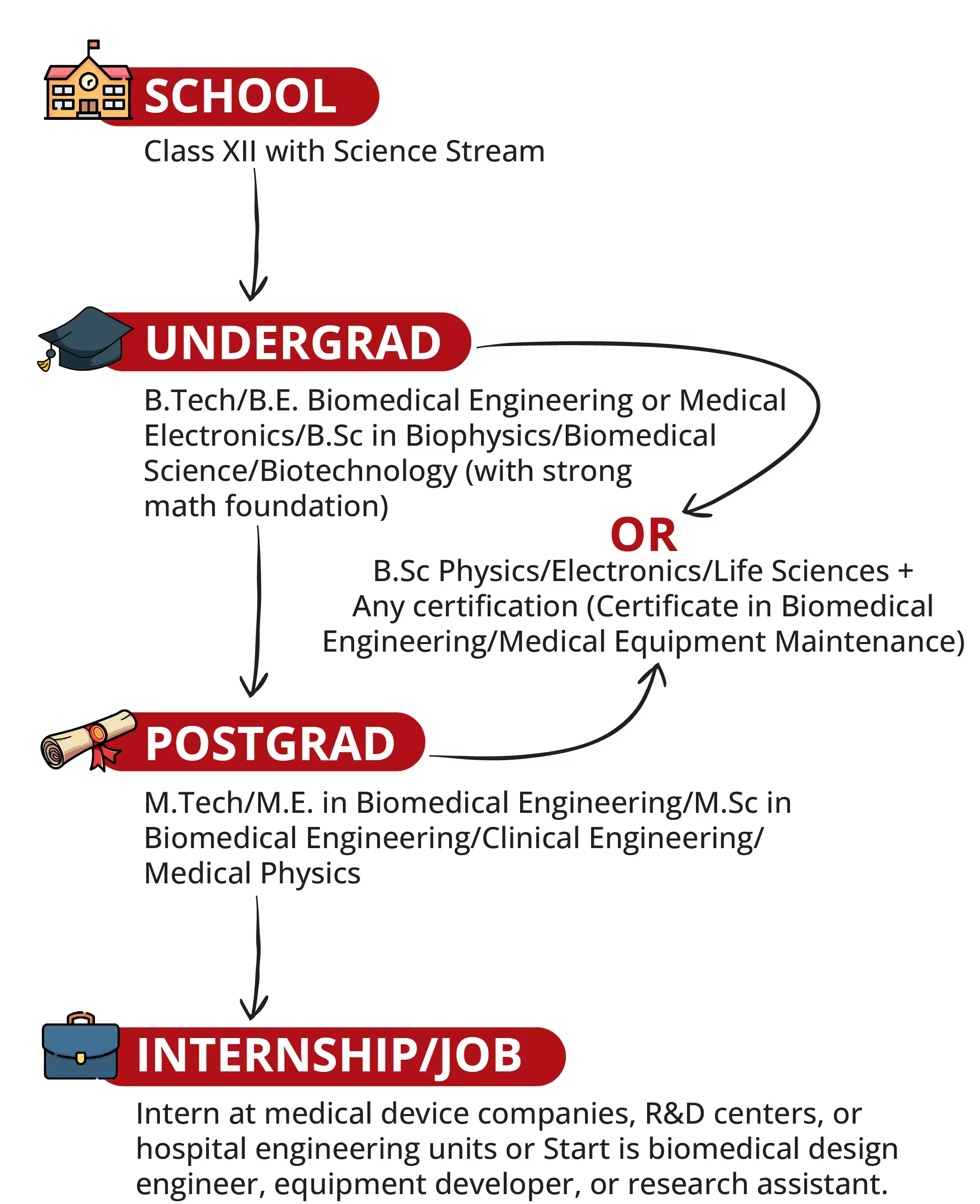
Bio-med Engineering is a respectable profession commonly chosen for the purpose of providing a better quality of life to individuals. Its courses are widely offered by many universities in both India and Abroad. The list of related courses with respective institutions is given below.
Biomedical Engineering is a field with many folds, offering multiple specialisations and related job opportunities. Some of those are listed below:
As much fascinating and impactful this field is, it demands a consistently curious mindset which can be adaptable to emerging healthcare technologies. Students who have discovered their interest in this field can cut the waiting time and start early with certificates.
Biomedical Engineering is an ideal blend of engineering innovation and medical science, built for those driven by curiosity and a deep desire to improve lives. It is a career that not only offers intellectual satisfaction but also creates a meaningful impact in the world of healthcare.
The field is a perfect fit for thinkers who want to shape the next generation of medical advancements. From developing life-saving devices to engineering tissues and analysing medical data, biomedical engineering gives you the skills to transform healthcare.

Q. Does biomedical engineering require NEET?
Ans. No, NEET is not required. Admissions are usually through engineering entrance exams like JEE or state-level tests.
Q. What is the average income of a biomedical engineer?
Ans. In India, biomedical engineers typically earn ₹3–7 LPA at entry level, and experienced professionals can earn ₹10–25 LPA or more depending on specialization and industry.
Q. Is a biomedical engineer a doctor?
Ans. A biomedical engineer should not be confused with a doctor. A doctor works directly with the patients, whereas a biomedical engineer is someone whose work is related to developing devices, and other solutions to contribute to people's health.
Q. Does biomedical engineering have a good career scope in future?
Ans. Yes, biomedical engineering has a strong future scope, with rising demand in areas like medical devices, artificial organs, medical imaging, healthcare AI, and wearable technologies. As hospitals, diagnostics, and health-tech startups grow, career opportunities for biomedical engineers will continue to expand.
Q. What certifications can boost a biomedical engineering career?
Ans. Certifications in medical device regulations (ISO 13485), clinical engineering, biomedical instrumentation, CAD design, AI in healthcare, and biostatistics.