
The Aerospace Engineering field is a fusion that blends principles of varied disciplines to design and operate aircraft. It is an umbrella field containing aeronautical and astronautical fields within. Aeronautical engineering majorly focuses on the workings of flights within the Earth’s atmosphere, whereas astronautical engineering focuses on the technology of flight and operations outside the Earth’s atmosphere, like spacecrafts.
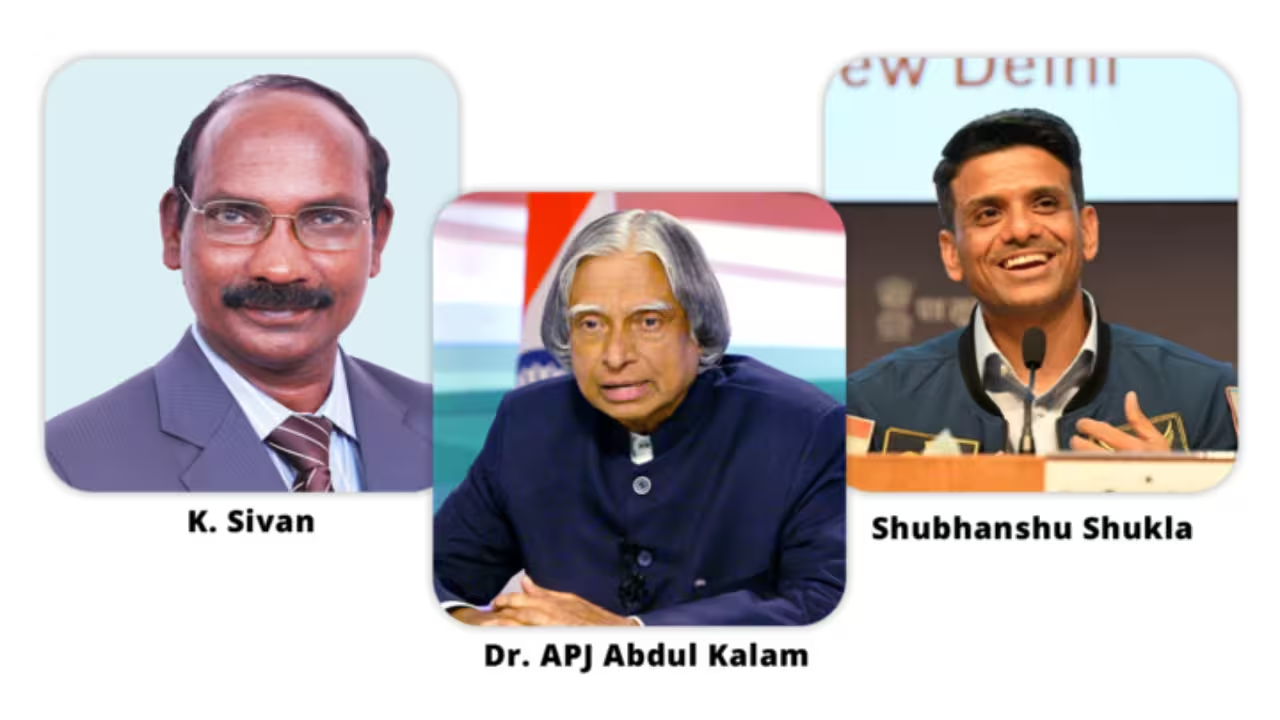
Aerospace Engineers who inspire to push the boundaries of flight and innovation.
Dr. APJ Abdul Kalam
Dr. A.P.J. Abdul Kalam, India’s “Missile Man,” led key projects like SLV-III, PSLV, and the Integrated Guided Missile Programme, boosting India’s defense and space capabilities. He played a pivotal role in the 1998 Pokhran-II nuclear tests and championed Technology Vision 2020. His innovations, including the Kalam-Raju Stent and Tablet, reflected his commitment to societal progress.
Shubhanshu Shukla
Group Captain Shubhanshu Shukla is an Indian Air Force pilot, aerospace engineer, and ISRO astronaut. In June 2025, he became the first Indian to travel to the International Space Station on the Axiom Mission 4. During his mission, he carried out research in space and helped work on ideas to make living in space more sustainable.
K. Sivan
K. Sivan, the “Rocket Man of India,” advanced aerospace engineering through his work on PSLV, GSLV MkII & MkIII, and the RLV-TD, specializing in mission design, control, and guidance. He developed the “day-of launch wind biasing” strategy, created the SITARA 6D simulation software, and led ISRO’s Gaganyaan human spaceflight program.
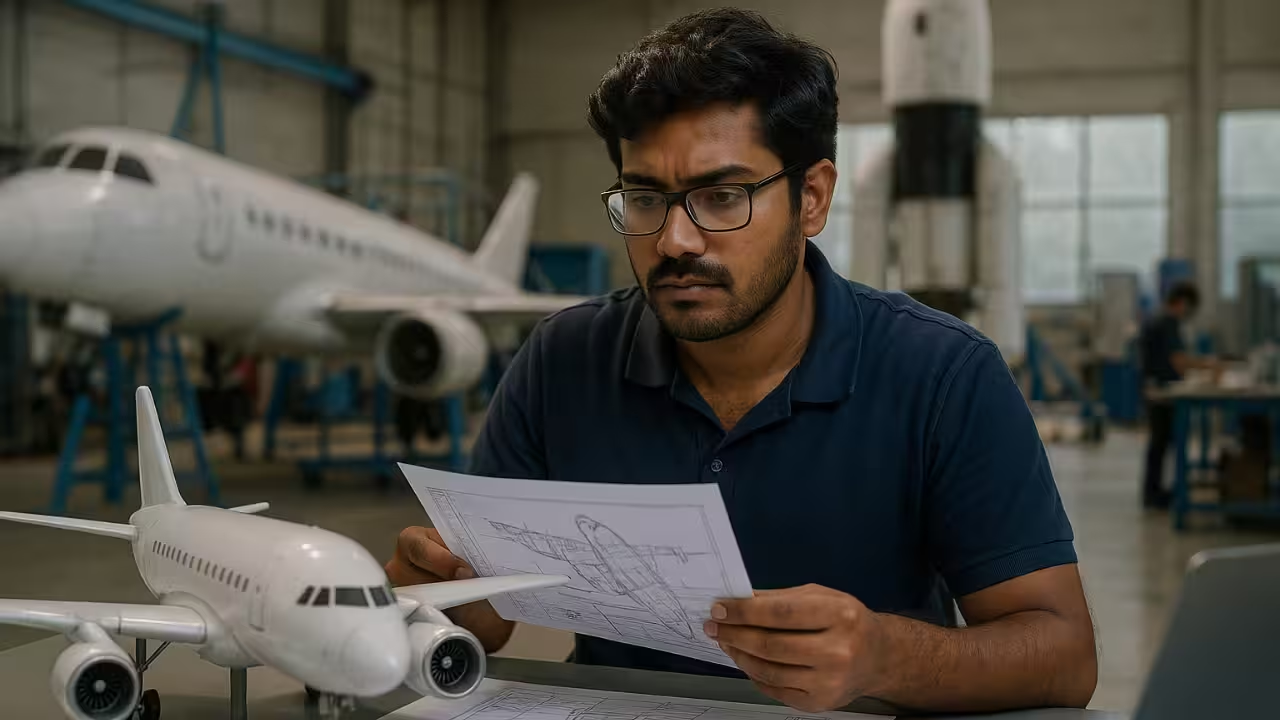
It equips students with the skills of thinking, designing, creating, operating and maintaining the spacecraft. It is a highly specialized field that merges science, innovation and technology to explore and conquer both the skies and outer space. Aerospace engineers work on projects including Aerodynamics, propulsion, avionics which are related to varied sections of concern in aerospace engineering. It is a field contribution to the next generation of sustainable aircraft or shaping humanity’s future in space.
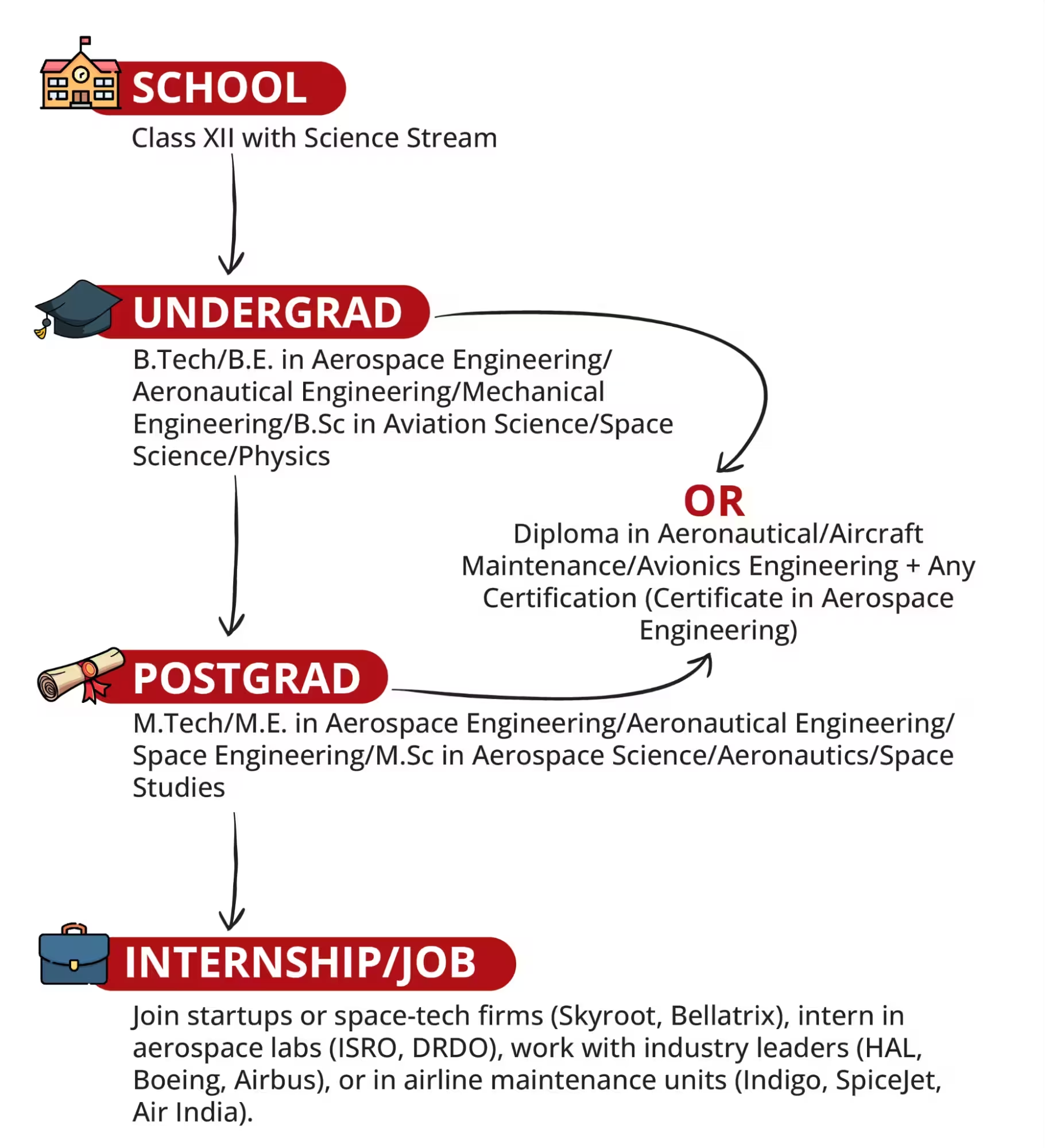
It is a technical field of study demanding the best knowledge of related techniques and their implementation. Development of a strong foundation in science and mathematics along with technical expertise in flight system, aerodynamics, propulsion, and space technology. The educational pathway which should be followed is given below:
Top aerospace engineering institutes both in India and around the world are listed below:
The field of aerospace engineering offers a wide variety of career options, which you can specialise in.
Here are some beginner-friendly courses and resources to explore concepts early and build a strong foundation.
Aerospace Engineering is more than just a career about space and rockets. It is a gateway to innovation and space exploration. From designing aircraft to building rockets and satellites, it provides you with real-world challenges to delve into. With the right education and hands-on learning, you can help shape the future of aviation and space technology.

Q. What are some of the biggest challenges in aerospace engineering today?
Ans. Major challenges in aerospace engineering include high development costs, strict safety standards, complex technology, and the need for sustainable and fuel-efficient designs.
Q. Do aerospace engineers get to work with space agencies like ISRO or NASA?
Ans. Yes, qualified aerospace engineers can work with organizations like ISRO, DRDO, HAL, and international space agencies or private space companies, depending on eligibility and experience.
Q. Is aerospace engineering only about space and rockets?
Ans. Not at all. Aerospace engineering has two main branches—aeronautical (aircraft that fly within Earth’s atmosphere) and astronautical (spacecraft and space technology). Many engineers work on airplanes, helicopters, UAVs, and defense systems.
Q. What is the salary of an aerospace engineer?
Ans. In India, aerospace engineers earn around ₹4–8 LPA at entry level, ₹10–20 LPA with experience, and ₹25 LPA or more in senior or global roles.
Q. What higher study options are available after aerospace engineering?
Ans. Students can pursue M.Tech/MS, PhD, or specialize in areas like avionics, propulsion, space systems, AI in aerospace, or aerodynamics.